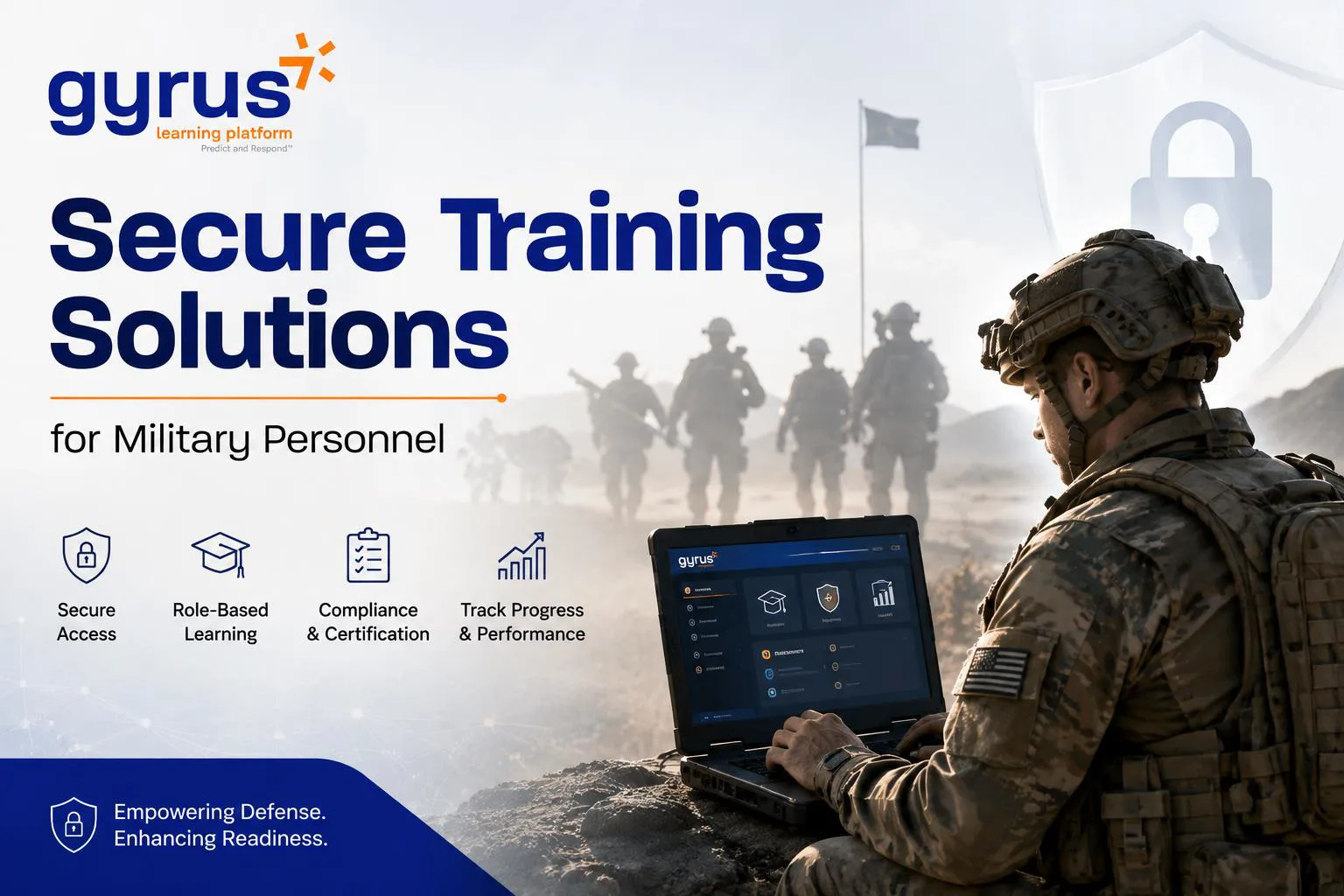
GyrusAim is a Readiness and Training Enablement Platform built for mission-critical environments. Designed for the unique needs of military and defense organizations, it delivers secure, self-hosted, and compliant LMS + TMS capabilities to manage training operations and readiness across distributed commands and deployed units.



With over 30 years of experience serving Military and Defense organizations, GyrusAim stands out as one of the premier learning management systems tailored for this sector. Here’s what sets us apart as the top choice for Military and Defense.
GyrusAim LMS offers robust features for implementing and managing standardized training protocols, ensuring consistency and readiness across personnel.

With its comprehensive compliance tracking and management capabilities, GyrusAim LMS enables military and defense organizations to navigate complex regulatory landscapes efficiently, ensuring all personnel receive necessary training.
We prioritize data security with advanced access controls and encryption measures, ensuring the confidentiality and integrity of sensitive information, aligning nicely with the stringent security requirements of military and defense operations.
With its mobile compatibility, GyrusAim LMS empowers personnel to access training materials from any location, facilitating continuous skill development and readiness even in remote or deployed environments.

GyrusAim LMS helps military and defense companies optimize resource allocation by offering a digital training platform that reduces reliance on physical facilities and instructor-led sessions, resulting in significant cost savings while maintaining training effectiveness.
GyrusAim LMS provides comprehensive performance tracking and assessment tools, enabling decision-makers to assess individual and unit readiness levels in real time, facilitating data-driven operational planning and improvement initiatives.
GyrusAim LMS boasts a user-friendly interface designed to accommodate users of all technical skill levels, ensuring easy access and engagement with training content for every employee.
Gain deep insights into training outcomes with comprehensive reporting features, enabling informed decisions and strategic planning based on data-driven metrics.
Maintain detailed records of training completion, assessments, and certifications. These records serve as an audit trail, providing evidence of compliance during regulatory audits or inspections.
Yes. Many learning management systems for military and defense organizations support flexible deployment options, including cloud-hosted, private cloud, or on-premise environments. This flexibility allows organizations to choose the infrastructure that best meets their security and operational requirements
Yes. Some learning platforms support air-gapped or offline deployments where internet access is restricted. These environments allow organizations to deliver training, store data locally, and maintain controlled access while ensuring training programs can still be tracked and managed securely.
Yes. Role-based access control allows administrators to define user permissions based on roles, ranks, or job responsibilities. This ensures personnel only access training materials and system functions appropriate for their responsibilities.
A military learning management system can support many training programs, including operational readiness training, technical certification programs, leadership development, compliance training, and cybersecurity awareness. These platforms often support eLearning, instructor-led training, simulations, and blended learning formats.
An LMS helps military organizations track personnel training progress, certifications, and qualification requirements. Administrators can monitor completion status, manage recurring training requirements, and ensure personnel maintain required certifications for operational readiness.
A military LMS can automate certification tracking, refresher training assignments, and reporting requirements. This helps ensure personnel maintain required qualifications while giving administrators visibility into training status across units or departments.